

 REQUEST INVITE
RevPAR grew 0.2% this year. Luxury is outperforming. San Francisco—surprisingly—posted the highest RevPAR growth while Austin, Houston, and Las Vegas continue to decline.
None of that changes the fact that you still can't find electricians, lead times on chillers haven’t meaningfully improved in years, and nobody knows what tariffs will look like next quarter.
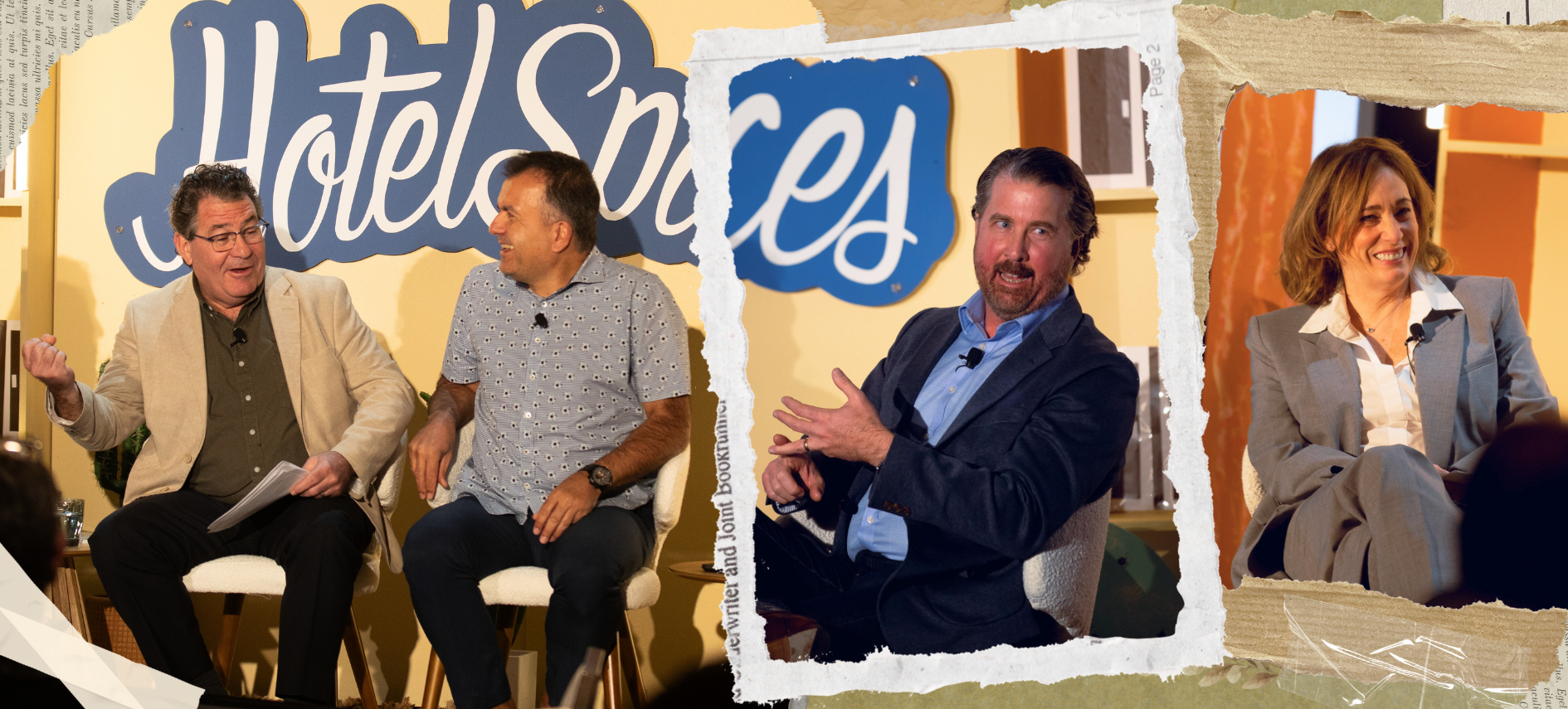
That’s the reality Fred Brandstrader, VP, Construction & Capital Expenditures at Hyatt; Rado Ivanov, VP Global Design US & Canada at Marriott International; and Justin Ried, SVP Pre-Development, Design & Construction at Host Hotels & Resorts walked into during the opening panel at HotelSpaces. Moderated by Lori Horvath, Managing Director, Hotels & Hospitality Group at JLL, the conversation started with market data and quickly moved to what construction and design leaders actually care about: how to keep projects moving when nothing sits still.
The Market Context from JLL
Before the conversation moved into labor, procurement, and project decisions, it started with the market reality.
According to JLL’s outlook shared during the session:
- RevPAR growth remains modest overall, with luxury and upper-upscale properties outperforming.
- Performance varies sharply by market, with San Francisco rebounding faster than expected while Austin, Houston, and Las Vegas continue to lag.
- Transaction volume remains sluggish despite recent rate cuts; debt costs and pricing gaps continue to stall deals.
- Debt costs are reshaping feasibility, limiting new ground-up development outside of luxury and mixed-use plays.
- Construction costs have not meaningfully corrected, keeping pressure on underwriting and contingency assumptions.
- Labor constraints persist, directly affecting schedules, sequencing, and delivery risk.
That context framed everything that followed — because forecasts only matter if teams know how to act on them.
The Labor Problem Isn't Going Away
"You can't find electricians," Brandstrader said flatly. The reason? Data centers and tech infrastructure projects are pulling skilled trades away from hospitality—and paying significantly more.
Ried confirmed what everyone in the room was feeling: "This market's pretty tough. You're starting to see that in the Washington, DC area. Florida's not far behind. Michigan."
It's not just electricians. Lead times on major building systems—elevators, chillers, MEP equipment—remain extreme. "They have not reduced since two, three years ago," Ried explained. "That's a tough part in planning."
The advice? Don't wait for it to get easier. "Keep the planning and design going," Brandstrader said. "When there's a window to move, you need to be ready."
Design firms are swamped, too. You can't just throw money at the problem and expect immediate capacity. So teams that kept planning and design moving through uncertainty are the ones positioned to act when conditions shift.
How Deals Are Actually Penciling (Or Not)
With interest rates hovering around 10%, even luxury ground-up construction is struggling to pencil. As Ivanov put it, “The only way we see deals actually penciling is when a branded residence or some kind of other development is attached.”
You sell the residences on paper, that finances the loan, and suddenly the hotel deal makes sense. "But obviously that doesn't work for select or midscale," Ivanov added.
Ried echoed the shift: "You hear a lot of discussion on upper upscale, uber luxury. That's the conversation that's happening because of these debt structures." Meanwhile, select service and midscale new builds have essentially stalled.
For owners, that means renovations continue to dominate. But not piecemeal—comprehensive, holistic renovations that touch guest rooms, meeting spaces, and amenities together. Ried pointed to Host’s experience as proof that coordinated investments outperform piecemeal upgrades.
The goal? 3-5% RevPAR index share gains. And they're getting it.
Tariffs and Procurement Changed Everything
Procurement used to be something you figured out once and moved on. Not anymore.
"We're spending a lot more time on it, obviously, than we used to," Ried said. "We used to do it quarterly, now it's once a month."
When tariffs shift, teams have to run scenarios on country of origin, product cost, and lead times—then explain to executives why costs jumped. "We've had to be really diligent with our teams to really create a matrix on every country, every aspect," Ried explained.
The other challenge? Timing decisions. "If you're thinking about a guest room renovation, and right now we're completing a model room renovation... we have to order that furniture here in two months for a renovation this summer."
That means making procurement calls now based on tariffs that could completely change by the time the order ships. Solution? Contingencies. Lots of them.
Manufacturing has also shifted in recent years, reshaping where products are made and how supply chains are managed. Chinese production moved to Vietnam and other countries—which helps with tariff exposure but creates new risks around quality control and lead times. "We want somebody that has a track record of a couple years of that production," Ried said. Nobody wants to be the guinea pig.
Where the Money's Actually Going
Here's the shift that caught attention: non-RevPAR revenue is growing faster than room revenue.
Ivanov laid out the numbers: "If you look at some forecasts... the RevPAR growth projections are in the low singles. The non-RevPAR are in the upper twenties year over year."
What does that mean? "In a couple of years, it will be less than half," Ivanov said, referring to room revenue as a percentage of total property income. "So what it means is... the experience whether it's waterpark, whether it's F&B, whether it's the excursions, whether it's the spa... it's going to be critical to make that property profitable."
That changes how hotels are designed and what gets prioritized in renovations. Meeting space breakout rooms. Pool and aquatic experiences. Outdoor amenities. F&B concepts that people actually want to visit—not just hotel guests grabbing breakfast.
Ried gave a concrete example: the waterpark at Orlando World Center Marriott. "We had a very year-long collaboration" with operations and the brand to figure out what experiences were missing. They identified the "tweeners"—kids who aged out of the existing pool but needed something engaging. The waterpark filled that gap and became a revenue driver.
Technology: High-Tech, But Still High-Touch
Technology came up repeatedly, but with a critical caveat from Ivanov: "We want to be a high-tech industry, but we're a high-touch industry."
People don't go to hotels because they don't have a bed at home. They go for the experience and the service. So technology has to enhance that, not replace it.
The challenge? Whatever technology you commit to in a renovation, you're stuck with for 7-15 years because it gets built into case goods. "On a good property, we're at a seven-year cycle," Ivanov explained. "Most of the technology goes into the case goods and they're not going anywhere for 15 years."
That makes bleeding-edge technology risky. Mobile key still hasn't solved identity verification in a guest-friendly way. Automated phone systems are replacing operators—and surprisingly, guests are getting better answers because responses are consistent and accurate.
But the big opportunity? Back-end systems. Reservation platforms that let guests select connecting rooms or specific amenities before arrival—the way you pick your airplane seat. "Why can't we have the way we have on airline reservations?" Ivanov asked. The answer: it's rolling out, but coordinating across 10,000 properties takes time.
Sustainability: Quiet But Not Optional
Sustainability "has become a fashion item," Ivanov said bluntly. "Right now, not very much in fashion." But the work hasn't stopped.
The reason? Corporate travel and group bookings require it. "Just like we do when we book travel, we look at the emissions of every flight," Ivanov explained. "The ones with lower emissions are prioritized in our booking system."
For owners, LEED certification drives group demand. "We have 20 out of our 80 [properties LEED certified], we have 15 more in the pipeline," Ried shared. "Mostly it's group demand... they're looking for that certification when they're booking."
Brandstrader added that Hyatt teams factor sustainability requirements into design decisions early, then translate those choices into clear materials that sales teams can use when responding to RFPs.
The long game matters too. Only 30% of a property's carbon footprint comes from construction and design decisions. The other 70%? Operations. Where you get energy. Where food is sourced. How the shuttle runs. That's where the real impact happens.
What Actually Matters
Nobody's waiting for clarity. Construction and design teams are keeping projects moving—designing, planning, pressure-testing—so they're ready when the window opens.
Labor shortages aren't temporary. Lead times haven't improved. Tariffs change weekly. And deals only pencil if you're creative about the financing or focused on renovations that deliver measurable performance gains.
But the teams that are moving? They're not paralyzed by uncertainty. They're building flexibility into every decision, keeping procurement agile, and recognizing that the guest experience—and the revenue it drives—goes way beyond the room.
🎥 Watch the full panel discussion here:

Posted by
Join us at HotelSpaces!
A One of a Kind Retreat for Hotel Development, Design & Construction Leaders.
Oct 25 - 27 | Fort Lauderdale, FL
Learn More
-Feb-13-2026-09-45-32-3950-AM.png)
.png)
.png)



Comments