

 REQUEST INVITE
.png)
Otonomus Hotel opened in Las Vegas last year and quickly drew national attention as what's being described as the world's first fully AI-powered hotel.
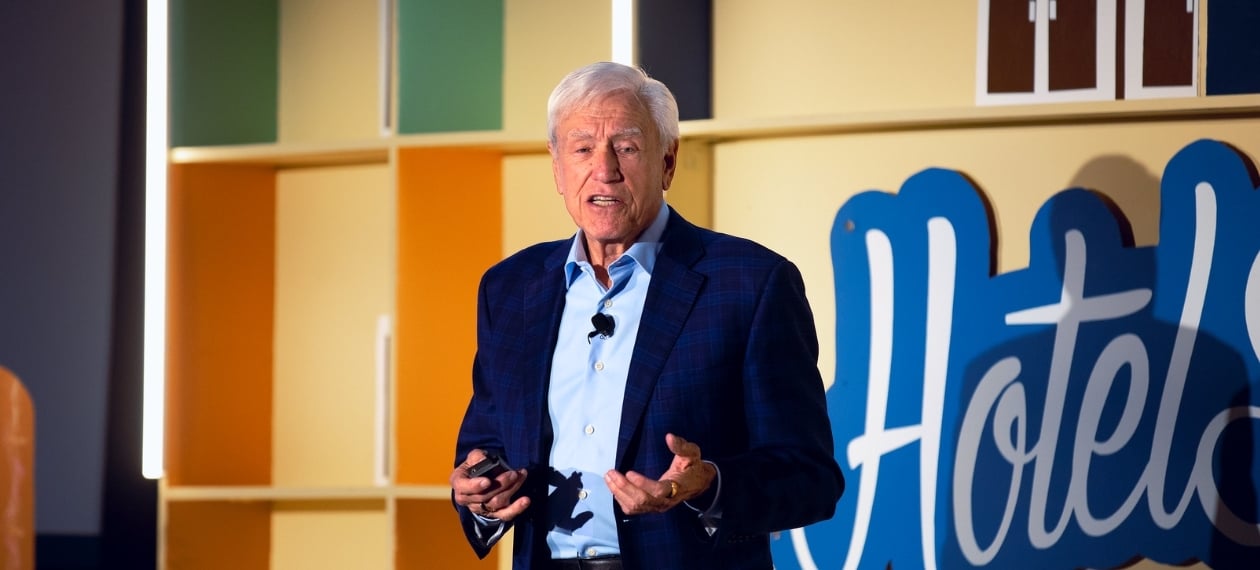
When Steve Escalante, VP of Development, walked through the project at HotelSpaces, he didn't talk about headlines or hype. He talked about math — and how that math stopped working.
His team was making $6,000–$7,000 a month on vacation rentals that would've brought in $1,800 as traditional apartments.
Then the constraints hit.
Cities began restricting short-term rentals. Financing tightened. Insurance premiums climbed.
The model that made those properties attractive at scale started to fall apart.
Otonomus Hotel emerged as a response to that shift — not as a tech experiment, but as a way to reconcile guest demand, operational reality, and asset performance in a format that could actually scale.
The Problem
Multifamily is trading at 5–6% return on cost in most markets. Good locations, but deals aren't penciling with current insurance and financing conditions.
Airbnb proved people will pay premiums for flexibility — group travel, extended stays, configurations hotels don't offer. But the model doesn't work at scale. Zoning restrictions, HOAs, neighbor complaints. And there's zero brand consistency.
Hotels deliver consistency, but little flexibility. Room types are fixed. Service models are fixed. Revenue levers are limited.
Steve's question: What if you could deliver hotel-level consistency in a product designed for the flexibility Airbnb proved people want — and make the asset work across market cycles?
A Simple Building with Complex Logic
Otonomus Hotel looks like a multifamily building — intentionally.
They built it on a multifamily budget. Standard construction methods, no exotic finishes. Steve was clear about not overbuilding the product.
The difference is in how the units function.
Rooms connect. A one-bedroom links to a two-bedroom, which links to another two-bedroom. Suddenly you have a four-, five-, or six-bedroom configuration where there's a premium to charge.
When demand shifts, those same units operate independently again.
They entitled it as a condo-hotel to preserve that optionality. If the market tightens, the asset can stabilize. If conditions improve, it can flex back.
Steve was clear: 'Every inch of this place has to make money.'
The projected performance? 12–18% return on cost, depending on market and F&B. That's 2–3x what the same building would yield as traditional multifamily.
A Custom Tech Stack
Once the physical model was set, the tech problem became unavoidable.
His team sat down with every major hospitality platform — Opera, Sabre, all of them. The problem: existing systems assume fixed room types, static inventory, limited personalization. They're not built for units that reconfigure on demand or service that varies guest by guest.
So they built FIRA (Fully Integrated Room Architecture), their own platform that connects systems that typically operate in silos.
What it does:
- Manages room configurations and inventory in real time based on demand
- Lets guests pre-select what they actually want (housekeeping frequency, privacy settings, amenities) instead of defaulting everyone to the same service model
- Captures preferences for every occupant, not just the reservation holder
- Turns traditional expense centers (like housekeeping) into revenue opportunities by making them opt-in
The approach was deliberate: technology didn't drive the decisions. The guest experience and revenue model did. They built tech to support how the building was designed to function.
Designed to activate — not just occupy
Public spaces were designed to activate, not just occupy.
The property includes a bar, a pool with a central catwalk platform, a courtyard surrounded by curated local restaurants, and multiple spaces that can be converted for events.
During fashion week, the pool becomes a runway for 500–600 people. The three-bedroom suites overlooking it turn into box seats for corporate buyouts. The courtyard supports alfresco dining with DJs and nightly programming.
They're not competing with 6,000-room properties bringing in top chefs. The goal is curated, elevated, but approachable — and appealing to locals as well as travelers.
Otonomus Hotel is located off-Strip where land costs less, but still within the Vegas ecosystem. Steve's team found that guests would drive 20–30 minutes for the right product — especially for group travel or extended stays.
In that context, amenities aren't just guest perks. They're revenue drivers.
Why now?
Steve didn’t mince words: "We couldn't have done this 10 years ago. The technology didn't exist."
What's changed:
- Mobile credentialing and IoT are reliable at scale now
- Guests expect digital-first experiences post-pandemic
- AI can handle the personalization and dynamic operations this model requires
- Cities are restricting Airbnb, creating demand for a legal alternative
The timing mattered because the market conditions that made this necessary — stagnant multifamily returns, Airbnb restrictions, demand for flexibility — converged with technology that could actually support the operating model.
Watch Steve’s full talk here 👇

Posted by
Join us at HotelSpaces!
A One of a Kind Retreat for Hotel Development, Design & Construction Leaders.
Oct 25 - 27 | Fort Lauderdale, FL
Learn More
-Feb-13-2026-09-45-32-3950-AM.png)
.png)



Comments