

 REQUEST INVITE
.png)
The best hotel decisions look obvious in hindsight
Turn the beds toward the view.
Build the pool on the cliff.
Run the tunnels under the property.
Each one sounds simple. None of them are cheap.
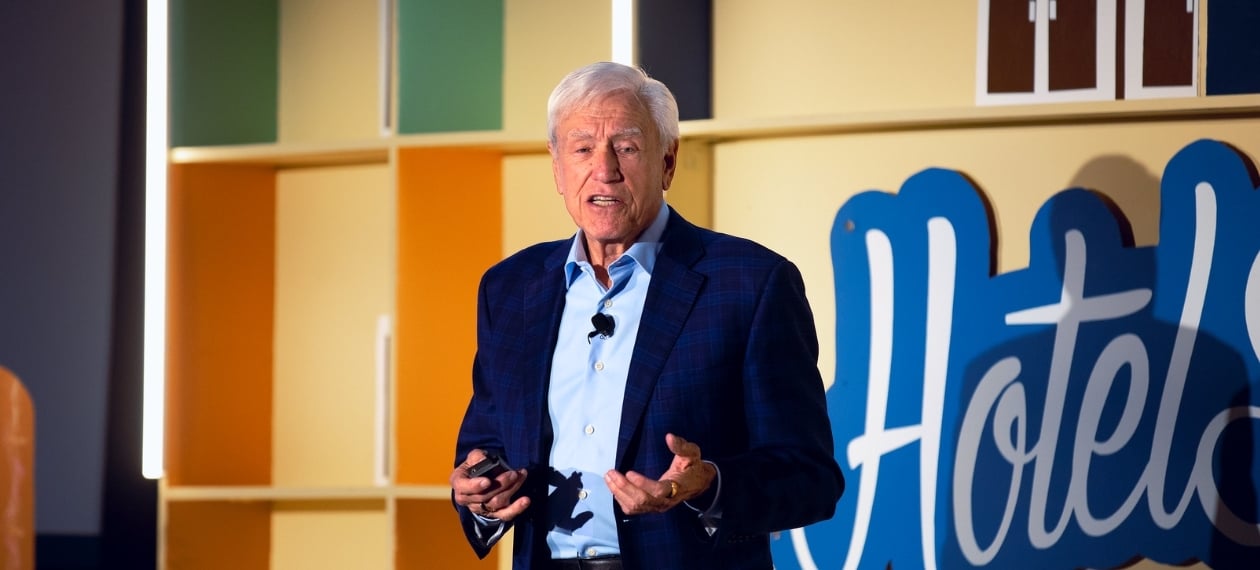
At HotelSpaces, Bill Navas, SVP of Design & Construction at DiamondRock Hospitality, Lissa Pierce, Head of Renovations & Project Design for Premium Brands at IHG, and Dan Abel, VP of Facilities and Engineering at VAI Resort, sat down with moderator David Breeding, SVP of Design & Construction at Aimbridge Hospitality, to talk about how those decisions actually get made.
Repositioning two Sedona hotels
One example came from DiamondRock Hospitality's $25 million renovation in Sedona.
The company acquired L'Auberge de Sedona, an 88-key luxury resort along Oak Creek, along with the nearby Orchards Inn in 2017. Orchards Inn sits roughly 120 feet above the creek, with sweeping views of Sedona’s red rock formations. But at roughly $300 a night, it was operating well below L’Auberge, where rates could reach $1,000.
The plan was to reposition both properties as a single resort experience and maximize the yield across the combined asset. It started with one decision: turn the beds toward the view.
"The views here are what everybody comes for," Navas said. "So we wanted the bed to be facing the view so when you wake up, that's what you see."
Reorienting the rooms meant changing the bed orientation and the bathroom layout to prioritize the views, which meant opening walls. Once construction started, the full picture emerged.
"We ended up stripping this thing to studs," Navas said. "We even had to add studs."
The pool presented a different kind of problem. The original had been closed for nearly two years after structurally failing. It wasn’t just dated, it was gone. Rather than rebuild it in place, DiamondRock relocated the new pool to the cliff between the two properties, creating a shared amenity space at the elevation midpoint with unobstructed red rock views.
Permitting added its own layer of complexity. Sedona has strict controls on anything visible from the outside — exterior colors are limited to four approved options, and inspectors enforce the details. A chrome shower fixture installed near the pool had to be painted black on site after an inspector flagged it.
"If you ever have to do anything there, good luck," Navas said.
Once permits were secured, construction took about nine months.
Where most renovations begin
Most branded renovations start with the PIP.
For Lissa Pierce, it's the starting point for the real conversation. For IHG's premium brands, Hotel Indigo, voco, Crowne Plaza, and Ruby, each PIP is written specifically for the property, with brand standards overlaid against what that hotel and market actually need.
"We always write it with the specific property in mind," Pierce said.
From the ownership side, that document becomes a negotiation. Navas described DiamondRock's approach as straightforward: understand the brand's reasoning, push back where it doesn't make sense, find the middle ground.
"Nine times out of ten you come to some agreement and give and take a little bit," he said.
When brands want to close a deal, key money — upfront capital tied to a franchise or management agreement — tends to be the most direct lever.
"The best way to entice us to go with your brand is to give us more key money," Navas said.
A different scale of development
There isn’t much in hospitality that compares to what’s being built in Glendale, Arizona.
VAI Resort spans 60 acres and carries a budget between $1 billion and $1.3 billion. When Dan Abel, VP of Facilities and Engineering, arrived on site in 2022 the project had around 600 rooms. It now has 1,100 across four hotel towers, 27 bars, 11 restaurants, and a concert venue designed for 11,000 guests.
The guestrooms in one tower face the stage directly, so guests can watch live performances from their balconies.
"You rent your room, you get your ticket, and you can stand on the balcony and watch the concert right from your guest room," Abel said. "I haven’t seen anyone else doing that anywhere in the country."
At that scale, operations don’t follow the design. They have to be designed in from the start. A network of service tunnels runs beneath the entire site, keeping staff and guest circulation completely separate. Electric vehicles move supplies and equipment between buildings across the property's 60-acre footprint.
"It's all about working smarter, not harder," Abel said.
Different projects, different goals
"It truly is a legacy project," Abel said.
That's the thing about hotel design at this level. The best decisions look obvious in hindsight: turn the beds toward the view, run the tunnels under the property, build the pool on the cliff.
But getting there requires clarity about what the property is actually trying to be long before anyone breaks ground.
That clarity is what determines whether the final product delivers on what guests came for.
Watch the full discussion bewlow 👇

Posted by
Join us at HotelSpaces!
A One of a Kind Retreat for Hotel Development, Design & Construction Leaders.
Oct 25 - 27 | Fort Lauderdale, FL
Learn More
-Feb-13-2026-09-45-32-3950-AM.png)
.png)



Comments